How to Be a Hands-Off Landlord and Reduce Daily Work
A hands-off landlord doesn’t disappear from the process. They build dependable systems and stay informed without managing every detail. Knowing how to be a hands-off landlord means setting clear routines for maintenance, tenant communication, rent collection, and leasing, then reviewing how those systems work. You remain responsible for oversight, but you don’t have to handle every task yourself.
It’s understandable to want fewer interruptions while still protecting your property and responding to tenants’ needs. The key is to delegate recurring work, automate predictable tasks, and keep a clear view of property performance. This guide explains how to coordinate maintenance, set practical communication routines, streamline leasing and rent collection, and maintain oversight through regular reviews. You’ll learn how to reduce daily involvement without losing sight of important decisions.
Key Takeaways
- Build a maintenance routine that handles recurring upkeep and routes repair requests to the right people.
- Set clear tenant communication practices so residents know how to raise concerns and what to expect.
- Use automation to reduce repetitive work in rent collection, applications, renewals, and scheduled tasks.
- Stay in control through regular reviews of property performance, finances, and maintenance without managing every detail yourself.
1. Maintenance coordination and vetted contractors
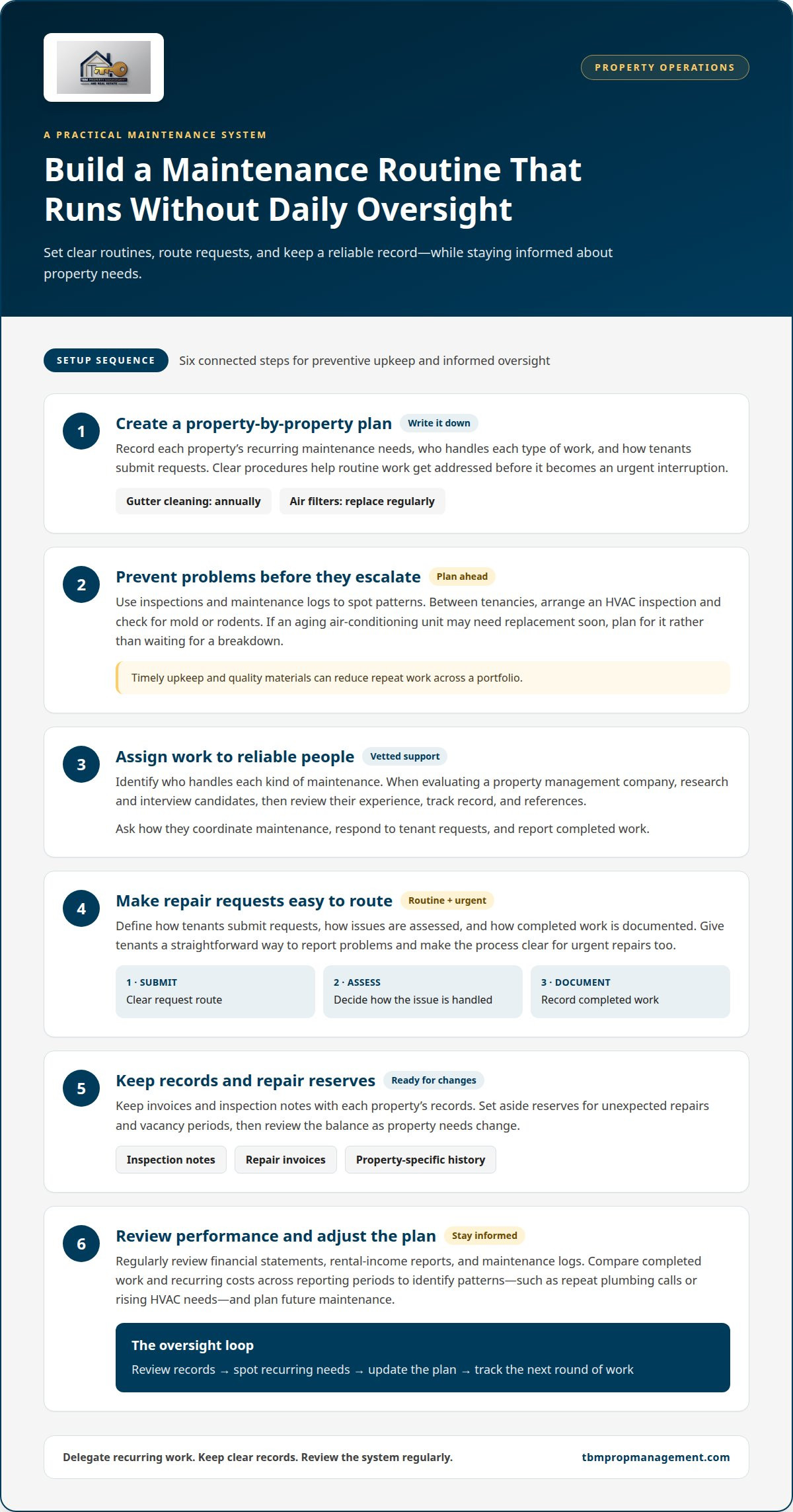
A written maintenance plan helps protect your property without putting every repair on your daily task list. A practical part of how to be a hands-off landlord is to record each property’s recurring needs, identify who will handle each type of work, and set a clear process for tenant maintenance requests. For example, schedule gutter cleaning annually and replace air filters regularly. Clear procedures can address routine work before it becomes an urgent interruption.
Use inspections and maintenance logs to spot patterns. Between tenancies, arrange an HVAC inspection and check for mold or rodents. Addressing issues then can reduce the chance of costly repairs during occupancy. If an aging air-conditioning unit may need replacement soon, plan ahead rather than waiting for a breakdown. Quality materials and timely upkeep can also reduce repeat work across a portfolio.
How do you find and vet a reliable property management company? Research candidates, interview them, and review their experience, track record, and references. If you’re considering how to be a hands-off landlord, ask how the company coordinates maintenance, responds to tenant requests, and reports completed work.
Set aside reserves for unexpected repairs and vacancy periods, then review the balance as property needs change. A reserve gives you room to address a sudden repair without treating it as a routine expense. Review financial statements, rental-income reports, and maintenance logs regularly. Compare completed work and recurring costs across reporting periods to spot patterns, such as repeat plumbing calls or rising HVAC needs.
Preventive maintenance also needs a clear process for urgent repairs. Define how tenants submit requests, how issues are assessed, and how completed work is documented. Keep invoices and inspection notes with each property’s records. This history helps you review spending and plan future maintenance, while giving tenants a straightforward way to report problems.
2. Tenant communication and security deposit documentation
Give tenants one clear route for routine questions and maintenance updates, such as email or an online portal. Ask them to include the rental address, a description of the issue, and when it began. Keep messages in a dated record so you can track follow-ups and spot recurring concerns. Clear communication channels can also prevent a simple request from turning into a string of missed calls.
Set predictable communication points. Schedule quarterly reminders for tenants to replace HVAC filters, and send a lease-expiration reminder 30 days beforehand. For urgent issues, explain how tenants should report the problem and what details to provide. Set regular availability hours for non-urgent messages, while keeping a separate process for serious emergencies.
Prepare reusable notices for common situations, such as filter reminders, inspection scheduling, repair updates, and lease-renewal discussions. Before sending one, add the tenant’s name, rental address, relevant date, and next step. Keep security deposit records together, including the signed lease, payment receipt, move-in condition notes, dated photos, and repair invoices. At move-out, record the property’s condition and retain communications about any proposed deductions or return.
Use a fair, objective, and consistent screening process to support compliance with fair housing laws. Apply the same stated criteria to each applicant and document the steps taken. Screening may include background checks, rental history, previous landlord contacts, and reviews of employment, income, and credit records. A consistent process makes decisions easier to explain and keeps leasing organized.
Online tools or a phone can help centralize tenant communication, rental listings, advertising, and task organization. Keep listing details consistent with the lease, and update applicants promptly as the process moves forward. A simple communication log can record the date, topic, response, and follow-up. Reusable notices, consistent screening records, and organized deposit documentation help you stay informed without answering every routine question in real time.
3. Automating rent collection and leasing tasks
Landlords can streamline rent collection, maintenance requests, and tenant communication by routing each task through an online system. Set up recurring rent instructions, a digital request form, and message notifications. For example, a tenant can report a leaking faucet and its location through a form, keeping the request organized for follow-up.
For rent, choose an online payment platform that records transactions and tracks due dates. Some property management systems process rental payments, deposit funds into owner accounts, and manage late payments. Electronic rent may take a few days to appear in the bank account after tenants submit it. Since tenants may accidentally submit payment twice, review transaction status before sending reminders.
Give tenants practical payment options, such as an online bank transfer or post-dated checks. A payment service can act as an intermediary, so tenants don’t need access to your private banking information. You can also automate rent and deposit collection, but keep separate records for each property and label each transaction clearly. This makes it easier to reconcile income and identify missing or duplicate payments.
Automation can also cover leasing tasks. Set up workflows for applications, lease renewals, and routine maintenance reminders, then review them to keep information current. A property management company may use an online platform for rent payments, while a separate calendar or management system tracks applications and renewals. Choose tools that fit your approach rather than adding overlapping systems.
Start by listing the routine tasks you handle manually and noting where delays or repeated follow-ups occur. Automate predictable steps first, such as payment reminders or maintenance-request routing, while keeping decisions that require judgment under personal review. Regularly review payment records and open requests to catch errors. Automation reduces repetitive work, but your oversight helps ensure rent, deposits, leasing tasks, and tenant concerns don’t disappear into a queue.
4. Balancing landlord involvement and oversight
Effective property management means delegating tasks while keeping a clear view of results. Decide which work a manager can handle independently, such as routine maintenance coordination, and which decisions need your approval, such as a major renovation. This division keeps daily tasks moving without losing sight of your investment goals.
What should landlords look for in a property management agreement? It should define the manager’s duties, maintenance approval process, rent-collection procedures, tenant-selection criteria, and reporting frequency. Read how the agreement addresses tenant concerns, expenses, and unresolved requests so you know what information you’ll receive and when.
What landlord responsibilities cannot be delegated to a property manager? You still need to set your investment priorities, provide clear instructions, and review decisions and reports. A manager can help with lease agreements, fair housing requirements, and eviction processes, but stay informed about important decisions affecting your property.
What are the risks of hiring a property manager, and how can owners monitor performance? Missed follow-ups, inconsistent tenant screening, or accounting errors can go unnoticed without oversight. Review rental-income reports, financial statements, maintenance logs, and tenant feedback. Compare open requests with completed work, and raise discrepancies promptly. Repeated repair calls for the same issue, for example, may indicate that the underlying problem needs attention.
Agree on a reporting schedule and regular performance reviews. Use these check-ins to discuss challenges, opportunities, property condition, and ways to improve rental income and value. Keep communication two-way: share changes in priorities and ask for clear updates on tenant concerns. This keeps you involved in meaningful decisions without taking back every task.
If routine oversight is taking more time than you can give, explore full-service property management to delegate daily operations while maintaining visibility into your investment.
TBM Property Management
TBM Property Management helps owners reduce day-to-day involvement while retaining clear oversight of their rental investments. Its Full Service plan includes tenant placement, rent collection, monthly owner statements, semi-annual inspections, and maintenance coordination. Tenant Placement & Leasing Only is available for owners who need support finding a tenant and preparing a lease. The current offer includes the first month free on property management service.
This support can be useful when maintenance requests, leasing steps, and rent follow-ups compete with your other responsibilities, or when a growing portfolio becomes difficult to organize. You can choose the level of support that fits the work you want to delegate while staying informed. The goal is a practical division of responsibilities, not stepping away from important decisions.
Contact TBM Property Management to discuss your property management needs.
Make room for a more sustainable ownership role
Your ideal level of involvement can change as your responsibilities, priorities, and rental portfolio evolve. Decide which decisions you want to keep close and where consistent support would give you more room to focus elsewhere. That boundary is personal, not a test of your commitment as an owner. A thoughtful approach to how to be a hands-off landlord means staying connected to your investment while choosing a manageable role in its day-to-day operation.
If you’re ready to discuss a management approach that fits your properties and priorities, contact TBM Property Management. A conversation can help you consider the support that makes sense for your situation, without stepping away from the oversight that matters to you. Contact TBM Property Management to explore your next step and move toward a more manageable ownership routine.
Frequently Asked Questions
How much does full-service property management cost in the United States?
The cost depends on the property, the management responsibilities, and the services included, and is provided after a quote request. For a useful comparison, consider whether the arrangement covers leasing, rent collection, maintenance coordination, inspections, and tenant communication. Also clarify how additional work is handled and what financial reporting you’ll receive. The service scope matters as much as the fee structure when assessing overall value.
What services should a landlord expect from a property manager?
Expect a written description of the manager’s responsibilities and decision-making authority. Depending on the plan, this may cover finding and screening tenants, leasing, rent collection, maintenance coordination, and property inspections. Clarify who approves repairs beyond routine work and how unresolved issues are reported. A defined scope helps you understand what the manager handles directly and which decisions remain yours.
How do federal, state, and local landlord-tenant laws affect hands-off landlords?
Rules at different levels can affect fair housing, lease agreements, and eviction processes, so property management must account for the property’s location and circumstances. A manager can help landlords address these requirements, but delegating daily tasks doesn’t remove the value of owner oversight. Keep records of key decisions and discuss how compliance-related questions are handled before they arise.
How can landlords screen tenants and reduce vacancies with minimal involvement?
Use a consistent screening process, applying background checks, rental history reviews, and employment verification objectively to applicants. To reduce vacancy-related work, organize listing preparation, showings, and applicant updates into one clear process. Professional photos and a compelling property description, for example, can help a listing stand out. A tenant-placement service can coordinate these steps while keeping you informed about applicant decisions.