
How to Respond if a Tenant Abandons Property in Maryland
If you’re deciding what to do if a tenant abandons property in Maryland, don’t treat absence or silence alone as proof that the tenant surrendered the home. No single factor necessarily establishes abandonment, and changing the locks based only on suspicion can create legal problems. Contact the tenant, document what you observe, and use the appropriate court process if you can’t establish that they gave up possession.
An empty home and belongings left behind can make the situation feel urgent, but a careful record and clear communication can help you choose your next steps. This guide explains how to assess possible abandonment without relying on one clue, reach the tenant, preserve evidence, and handle belongings, locks, and possession lawfully. It also covers when rent-related court procedures may apply, so you can protect the property without interfering with a tenant’s rights.
Key Takeaways
- Assess the full picture before treating a rental as abandoned; payment history can inform your judgment but doesn’t prove surrender by itself.
- Keep a clear record of tenant contact attempts and photograph and inventory belongings left in the unit.
- Protect your right to possession by following the appropriate legal process before taking control of the property or changing its locks.
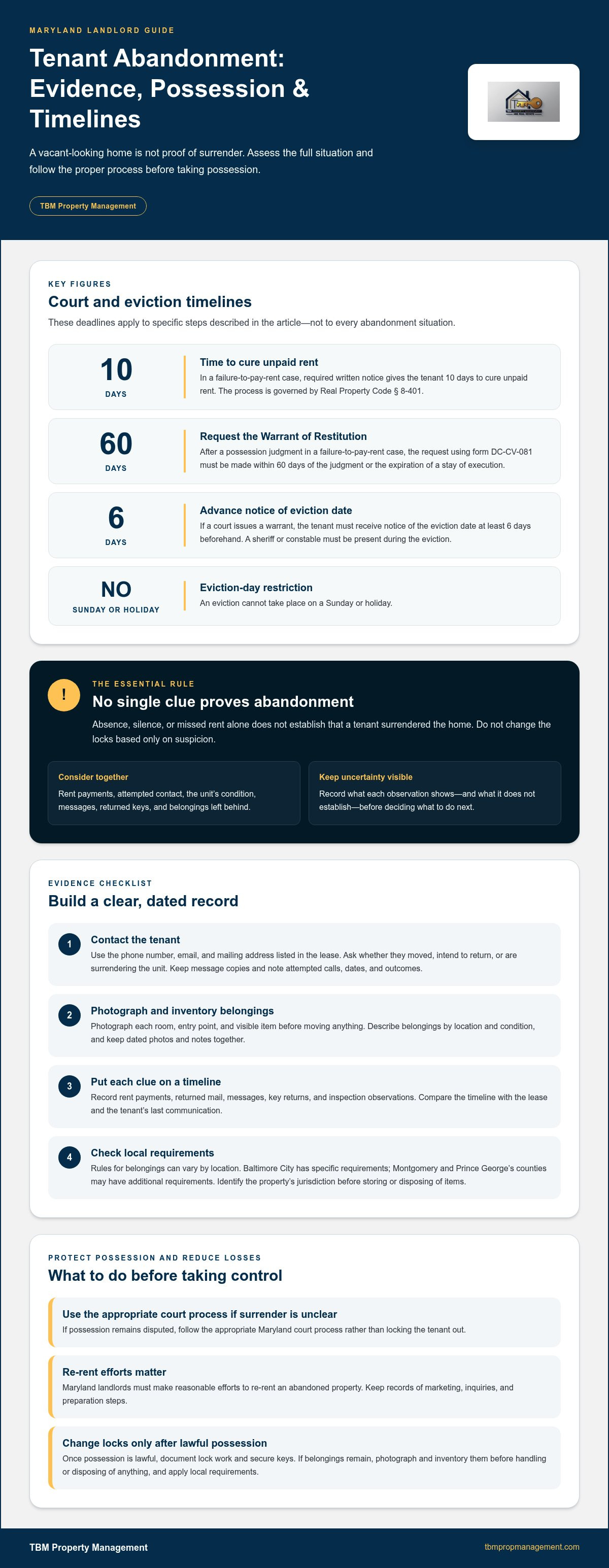
- If you obtain a judgment for possession, track the deadline for requesting a Warrant of Restitution; according to Maryland Judiciary, the request must be made within 60 days of the judgment or the expiration of a stay of execution.
What Constitutes Tenant Abandonment?
If you’re deciding what to do if a tenant abandons property in Maryland, assess the full situation before treating the rental as surrendered. Maryland has no single test that proves abandonment. A tenant’s absence, silence, or missed rent payment alone doesn’t establish surrender.
If you need to leave before your lease ends, tell your landlord in writing, keep a copy, and arrange to return the keys. You may still owe unpaid rent and other amounts allowed by your lease and applicable law.
Local rules can affect how you handle abandoned belongings. Baltimore City has specific requirements, and Montgomery and Prince George’s counties may have additional requirements. Identify the property’s jurisdiction before storing or disposing of items.
- Record facts that support or contradict abandonment. Note rent payments, attempted contact, the unit’s condition, and whether belongings remain. No single clue settles the question, so use this record to guide your next step.
- Contact the tenant and preserve evidence before moving anything. Make an inventory and take photographs of property left behind. Check applicable state and local requirements before storing or disposing of belongings.
- Mitigate rent losses if the tenant has abandoned the rental. Maryland landlords must make reasonable efforts to re-rent the property, while keeping records of marketing, inquiries, and preparation steps.
- When deciding what to do if a tenant abandons property in Maryland, use the appropriate court process if the tenant hasn’t clearly surrendered possession. In a failure-to-pay-rent case, the process is governed by Real Property Code § 8-401; required written notice gives the tenant 10 days to cure unpaid rent.
- After a possession judgment, a landlord may request a Warrant of Restitution using form DC-CV-081. According to the Maryland Judiciary, the request in a failure-to-pay-rent case must be made within 60 days of the judgment or expiration of a stay of execution. Baltimore City law also provides that landlords and their representatives aren’t liable for loss or damage to property deemed abandoned under that law.
Changing locks and lawful possession
A vacant-looking Maryland rental doesn’t automatically give a landlord possession. Don’t change the locks solely because you suspect the tenant has moved out. First establish whether the tenant surrendered the unit or whether a court process is needed to regain possession.
- Review the evidence before making a lock decision. Compare the tenant’s messages, returned keys, payment history, and belongings in the unit. A missed rent payment or lack of response alone doesn’t prove surrender, so record what each clue shows and what remains uncertain.
- Contact the tenant using the lease’s contact details and keep copies of your messages. Ask whether they intend to return, have surrendered the unit, or need to arrange a key return. Avoid wording that treats the tenancy as ended before you have a clear basis for that conclusion.
- If possession remains disputed, use the appropriate Maryland court process rather than locking the tenant out. In a failure-to-pay-rent case, a landlord may request a Warrant of Restitution after judgment, using form DC-CV-081. According to the Maryland Judiciary, the request must be made within 60 days of judgment or the expiration of a stay of execution.
- Follow the execution requirements if the court issues a warrant. A sheriff or constable must be present during an eviction, and the tenant must receive notice of the eviction date at least 6 days beforehand. An eviction cannot take place on a Sunday or holiday.
- Change or rekey the locks only after you have lawful possession, then document the work and secure any keys. If a tenant’s belongings remain, photograph and inventory them before handling or disposing of anything. Baltimore City has specific rules for property left during an eviction, so apply local requirements to the property’s location.
Keeping the timeline, court paperwork, and lock records together helps make each decision traceable. A consistent property oversight process can also help landlords coordinate inspections and maintenance while protecting possession.
Contacting tenants and documenting apparent abandonment
Use direct contact and a dated record to assess the situation before treating the rental as abandoned. These steps can also help organize evidence if an eviction or possession case becomes necessary.
-
Contact the Tenant
Contact the tenant through the phone number, email, and mailing address listed in the lease. Ask plainly whether they’ve moved, intend to return, or are surrendering the unit, and request a response. Keep copies of messages and note attempted calls, including dates and outcomes. Don’t declare the tenancy over or promise access to belongings before the tenant clearly confirms surrender.
-
Document Signs of Apparent Abandonment
Photograph each room, entry point, and visible item before moving anything. Make an inventory describing belongings by location and condition, such as boxes in a bedroom closet or a sofa in the living room. Separate observations from conclusions: an empty refrigerator is an observation, not proof that the tenant surrendered possession. Keep dated photos and notes together.
- Build a timeline to put each clue in context. Record the dates of missed or received rent payments, returned mail, messages, key returns, and inspection observations. Note whether utilities appear disconnected only if that information is available through lawful access. Compare the timeline with the lease and the tenant’s last communication instead of relying on one event to decide whether abandonment occurred.
- Keep records organized if the situation may lead to an eviction or court filing. Save the lease, rent ledger, contact attempts, photographs, inventory, and inspection notes together. If the tenant’s disappearance raises concerns about criminal misconduct, contact local authorities immediately. Don’t disturb potential evidence or discard belongings while documenting the situation.
What notice must a Maryland landlord give before entering an apparently abandoned rental unit?
Apparent abandonment doesn’t by itself determine whether or how you may enter. Use these steps to plan entry, communicate clearly, and keep a record.
- Review the lease’s entry clause before scheduling a visit. Check its notice period, delivery method, and permitted reasons for entry. Follow those terms for an inspection or repair rather than assuming an empty-looking unit has different rules.
- Send written notice to the tenant using the contact method stated in the lease. Identify the rental address, intended date or time window, and purpose, such as checking a reported leak or inspecting the unit. Keep a copy and record when and how you sent it.
- Describe the reason accurately and don’t use language declaring the tenancy over. For example, say you plan to inspect a possible maintenance issue, not that you’re taking possession. If the lease specifies a notice process, follow it rather than creating a shorter timeline based on the tenant’s silence.
- At entry, limit your visit to the stated purpose. Bring a witness when practical, note your arrival and departure times, and photograph relevant conditions. Don’t handle or remove belongings simply because the unit appears vacant. If the tenant responds before entry, document the message and reassess the planned visit.
- If the tenant doesn’t respond, keep the notice and entry notes with the lease and earlier contact records. Separate what you observed, such as a leaking fixture, from assumptions about abandonment. If the tenant disputes entry or possession, pause non-urgent access and use the appropriate process before taking further action.
For a documented inspection and maintenance follow-through, coordinate property inspections.
TBM Property Management: Full-Service Property Management
TBM Property Management helps Maryland owners manage the practical work that follows a tenant’s departure. Its Full-Service Property Management combines ongoing oversight with leasing, rent collection, and coordination of the next tenancy.
If managing tenant communication, property needs, and preparations to re-rent the home is becoming difficult, Tenant Placement and Leasing Services can support the transition to a new renter. Rent Collection can also help organize payment administration once a tenancy begins. These services complement your decisions about possession and legal process; they don’t replace required court procedures.
If you’d like support managing your Maryland rental, contact TBM Property Management or visit tbmpropmanagement.com.
Make Your Next Rental Transition More Manageable
Use the next step to create a steadier process for your rental, not just to close out one difficult tenancy. If you’re still deciding what to do if a tenant abandons property in Maryland, keep legal possession decisions separate from the practical work of preparing for a future renter. A clear handoff can help you move forward while keeping the property’s ongoing needs in view.
TBM Property Management offers Full-Service Property Management, Tenant Placement, and Leasing Services. These services support owners who want help managing a rental and arranging the next tenancy. Choose the level of support that fits your responsibilities and the work you want to delegate.
For a practical conversation about your rental’s next steps, contact TBM Property Management. With a thoughtful process and the right support, you can approach the next chapter with greater confidence.
Frequently Asked Questions
How should a Maryland landlord give notice?
Use the notice method and timing in the lease for planned entry, and keep a copy of what you send. For a residential failure-to-pay-rent case, Maryland landlords must provide written notice and allow 10 days to cure before filing, according to the Maryland General Assembly. The notice of intent to file uses form DC-CV-115. Keep proof of delivery with the rent ledger and lease.
What should I do first?
Start by checking the lease and gathering the facts before making changes to the unit. Review the rent ledger, recent messages, and any key-return arrangements. If there’s a possible emergency, such as visible water damage, document the condition and address the immediate property concern through appropriate entry procedures. Keep repair decisions separate from conclusions about whether the tenant surrendered possession.
What happens in Maryland landlord-tenant court?
The court considers the landlord’s filing and the tenant’s response before deciding possession. In a failure-to-pay-rent case, the process is governed by Real Property Code § 8-401. If the landlord wins possession, the eviction process cannot start until 7 business days after judgment. A Warrant of Restitution request must be made within 60 days, and the tenant must receive the eviction date at least 6 days beforehand.
What should a landlord do with belongings left behind?
Photograph and inventory the belongings, then identify the local rules that apply before storing or disposing of anything. General Maryland landlord guidance advises storing items for a reasonable period, typically 30 days, and providing written notice before disposal. Baltimore City has specific requirements, and local rules may differ elsewhere. Keep the inventory, notice, and any records of how items were handled together.
How does Maryland law define tenant abandonment of a rental property?
Maryland has no single factor that automatically defines a rental as abandoned. A tenant’s absence, silence, or missed rent payment alone doesn’t establish that the tenant surrendered the property. Assess the circumstances as a whole, including communications and indications of continued occupancy. If surrender can’t be established, you may need to use the appropriate court process to regain possession.
How can a Maryland landlord determine whether a tenant has abandoned the property?
Assess multiple facts rather than relying on one clue. Compare the tenant’s communications and payment history with the unit’s condition, any returned keys, and whether belongings remain. For example, missed rent combined with written confirmation that the tenant is moving out differs from missed rent with no response and personal items still inside. Record each fact and its date before deciding what action to take.