
Landlord Rights in Montgomery County, MD: Rules and Remedies
Clear rights come with clear responsibilities. In Montgomery County, landlords must give tenants 90 days’ notice of a rent increase and 72 hours’ advance notice whenever a property inspection is scheduled. Understanding landlord rights in Montgomery County, MD also means accounting for local requirements alongside Maryland landlord-tenant law.
That can feel like a lot to manage, especially when a repair, deposit dispute, or move-out raises questions about what to do next. This guide explains how landlords can respond to property defects, document deposits and move-outs, and address situations where a lease may end early. It also covers notices, property access, and rental conditions, so you can understand your rights and the steps that help keep a tenancy on track.
Key Takeaways
- Address property defects through an organized maintenance process, and account for county requirements before marketing a rental.
- Keep clear records of security deposits, property condition, move-out inspections, and any deductions.
- Recognize that qualifying circumstances can allow a tenant to end a lease early with written notice.
- Track notice deadlines and lease obligations carefully, including the county’s nonrenewal notice requirement.
Remedies for defective property conditions
Understanding landlord rights in Montgomery County, MD starts with knowing which rental conditions require attention. Landlords must provide adequate heat of at least 68 degrees. Rentals with fuel-burning appliances must also have a carbon-monoxide detector. For rent increases, landlords must give tenants 90 days’ notice and may raise rent once every 12 months with proper notice.
Some defects call for a prompt, documented response. Montgomery County landlords must provide air conditioning that maintains a temperature of not more than 80 degrees from June 1st through September 30th, except in detached single-family homes. If a tenant reports a failed cooling system, record the complaint, arrange repair work, and document follow-through. A work-order process can track each report, vendor coordination, inspections, and completion.
Rental readiness starts before marketing. Account for applicable licensing and administrative requirements, then assess the property’s condition before advertising it. The Montgomery County Department of Housing and Community Affairs inspects multifamily properties at least once every three years. Regular inspections and maintenance records can help identify unresolved problems before they affect a tenant.
Access has limits, too. For non-emergency repairs, landlords may enter a rental property after giving at least 24 hours’ notice. State the repair purpose, coordinate the visit with the tenant, and record the outcome. A clear account helps distinguish urgent safety concerns from routine work and shows how the reported condition was addressed.
Understanding landlord rights in Montgomery County, MD also means having a reliable process for recurring maintenance and licensing tasks. Professional property management can organize tenant reports, coordinate vendors, document inspections, and track repairs through completion. This helps landlords follow an issue from the initial report to the final property condition.
Montgomery County had 39 reported multifamily rental properties with unresolved repairs in 2023, underscoring the value of structured work-order intake, vendor management, inspections, and follow-through.
Montgomery County, Maryland passed Council Bill 6-25, the Consumer Protection for Renters Act, to strengthen habitability enforcement and provide renters with legal recourse. Licensing, turnover handling, and submarket-specific expectations may also make professional management worth considering.
Security deposits and move-out procedures
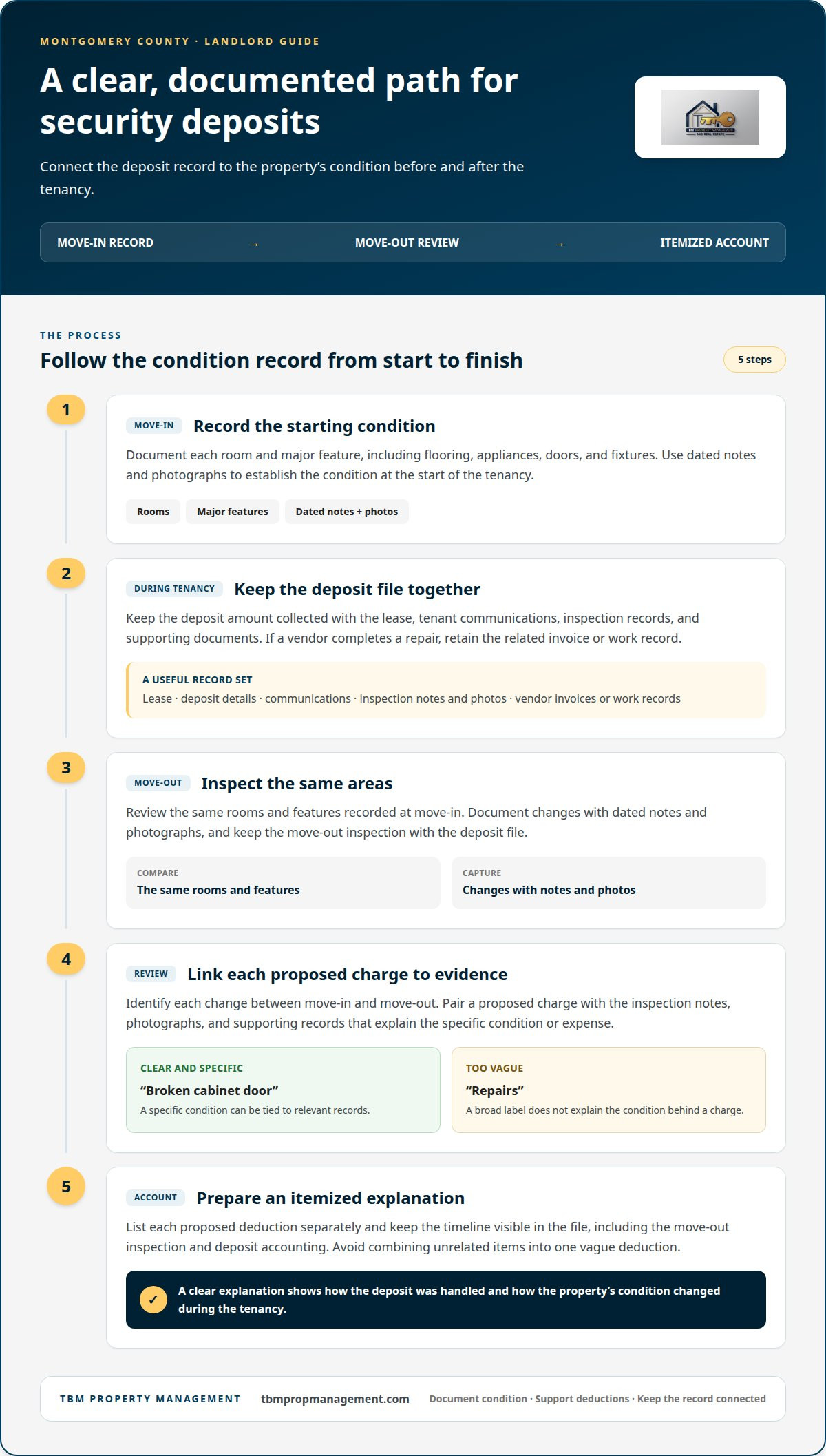
A well-documented move-out connects the deposit record with the rental’s condition before and after the tenancy. In Montgomery County, clear records help explain how a proposed charge relates to observed damage.
Security Deposit Handling
For security-deposit records, document the amount collected, the property’s condition, the move-out inspection, any itemized deductions, and the timing of each step. These records provide a consistent account if a tenant questions a charge. Keep deposit details with the lease, then organize move-out documents so each deduction can be traced to a specific condition or expense.
At move-in, record the condition of each room and major feature, including flooring, appliances, doors, and fixtures. At move-out, inspect those same areas and document changes with dated notes and photographs. A direct comparison is more useful than a general statement that the housing was left damaged. Keep communications and inspection records with the deposit file.
Deposits and Property Damage
A security deposit may be applied to property damage when the move-out record identifies a specific condition and supports an itemized deduction. A charge should be explainable, not simply listed without context. For example, a note describing a broken cabinet door is clearer than a broad entry for “repairs.” Pair each item with relevant inspection notes, photographs, and supporting records.
Follow a clear sequence: compare move-in and move-out conditions, identify each change, gather records supporting any proposed charge, and prepare an itemized account. If a vendor completed a repair, retain the related invoice or work record. Avoid combining unrelated items into one vague deduction. A clear explanation helps both parties understand how the deposit was handled and how the property’s condition changed during the tenancy.
Keep the timeline visible in the file, including the move-out inspection and deposit accounting. Consistent property inspection records can make this process easier to manage across rental homes.
Early lease termination conditions
In Montgomery County, tenants may end a lease early with 30 days’ written notice for specified reasons. These include certain employment changes, domestic violence, landlord harassment, or other reasonable causes beyond the tenant’s control. A landlord should assess the stated reason and notice together, rather than treating every request as an automatic release or a standard move-out.
For an involuntary employment change to qualify, the move must be from the Washington Metropolitan area, generally 25 miles. The distance and involuntary nature of the change matter. A tenant requesting termination for this reason should explain the employment change and new location in writing. Keep the request with the lease record, along with the date the notice was received.
Age and housing needs can also qualify. A tenant or the tenant’s spouse who is at least 62 years old and can no longer live independently may end the lease early to move to nursing home or senior citizen housing. The landlord should record the written request and the stated reason, then coordinate move-out details without confusing this protected circumstance with an ordinary preference to relocate.
A qualifying tenant may be charged a termination fee of no more than one month’s rent. Apply this limit to the specified early-termination right, and keep the charge separate from itemized move-out deductions. Clear records can show which amount relates to ending the lease and which concerns the property’s condition.
Property conditions may create another route. In Montgomery County, a tenant may terminate early if the landlord fails to correct high radon levels within 90 days after being notified. Record when notice arrives, the reported condition, and the response timeline. A prompt, traceable response helps clarify whether the issue was corrected within that period and supports orderly communication with the tenant.
Landlord rights and responsibilities
Montgomery County landlords have defined rights, but notices and lease terms also carry specific duties. County requirements apply alongside Maryland landlord-tenant law.
Notice for Rent Increases and Tenancy Endings
Notice rules set the required timing for rent increases and tenancy endings, helping landlords plan changes clearly. Montgomery County landlords must give tenants 90 days’ notice of a rent increase, and may raise rent once every 12 months with proper notice.
A Montgomery County landlord seeking to terminate a tenancy at the end of a lease must give a 60-day nonrenewal notice 60 days before the lease expires, according to Montgomery County Department of Housing and Community Affairs. A separate notice applies to a tenant in breach of the lease: the landlord may terminate with 30 days’ notice. Identify the reason for ending the tenancy before selecting the notice and timing.
Lease terms also shape landlords’ responsibilities. Montgomery County landlords must offer tenants a two-year lease for the first term and at renewal; a shorter term requires reasonable cause. Include the required county handbook with each lease unless the tenant signs a statement declining the copy and accepting a referral to it.
Eviction Filing and Housing Compliance Help
Eviction filing is the court process for seeking possession, while local housing and community compliance help can address landlord-tenant concerns outside court. For failure to pay rent, landlords may sue in Montgomery County District Court after 10 days have passed since providing a Tenant Summary Ejectment Notice for Failure to Pay Rent.
The Montgomery County Office of Landlord-Tenant Affairs enforces Chapter 29 of the Montgomery County Code and parts of Title 8 of Maryland’s Real Property Article. It provides rights and responsibilities information and helps resolve disputes amicably, free of charge, without requiring the District Court process. For tenant screening that supports a consistent leasing process, explore tenant screening support.
TBM Property Management
TBM Property Management helps Montgomery County landlords coordinate the practical work behind a rental, from leasing and rent collection to maintenance coordination. If notices, tenant turnover, and property upkeep are becoming difficult to manage alongside your other responsibilities, Full-Service Property Management can bring those tasks together. For a new vacancy, Tenant Placement and Leasing Services support the process of finding a tenant and preparing the tenancy. The right support depends on where you need help, whether that’s ongoing oversight or a specific leasing task. Contact TBM Property Management to discuss support for your rental.
Build a Steadier Rental Management Plan
Understanding landlord rights in Montgomery County, MD is one part of managing a rental with confidence. The next step is turning requirements into a consistent routine, so tenant communication, property records, and lease decisions do not depend on last-minute effort. A simple calendar and organized files can keep responsibilities visible as circumstances change. Review your processes when a tenancy begins, changes, or ends, and ensure each decision is supported by a clear record.
TBM Property Management offers Full-Service Property Management, Tenant Placement, and Leasing Services to support landlords seeking ongoing oversight or help preparing for a new tenancy. Choose the level of support that fits your property and your workload. Contact TBM Property Management to discuss the next step for your rental. With a clear plan and dependable support, you can move forward with greater confidence.
Frequently Asked Questions
What rental license or registration does a Montgomery County landlord need?
Montgomery County landlords must account for county licensing and administrative requirements as well as Maryland landlord-tenant law. The applicable steps depend on the rental property and its local requirements, so address licensing and rental readiness before marketing a unit. Property type matters: multifamily and detached single-family rentals can face different conditions, including different air-conditioning requirements.
What are Montgomery County's rental housing inspection and habitability requirements?
Multifamily properties are inspected by the Montgomery County Department of Housing and Community Affairs at least once every three years. Landlords must provide adequate heat of at least 68 degrees and, except in detached single-family homes, air conditioning that maintains no more than 80 degrees from June 1st through September 30th. Fuel-burning appliances require a carbon-monoxide detector, and smoke detectors must be replaced after ten years.
When may a Montgomery County landlord enter a rental unit, and what notice is required?
For non-emergency repairs, landlords should give tenants advance notice before entering the rental unit. For a planned property inspection, give tenants advance notice and clarify the purpose of entry. These are separate notice requirements, so identify the purpose of entry before notifying the tenant. For example, a planned repair visit and a scheduled inspection should not be treated as interchangeable simply because both involve access to the unit.
What rules govern late fees, lease terms, and required disclosures for Montgomery County landlords?
A landlord may charge a late fee no greater than 5% of monthly rent due after rent is 10 days late. Landlords must offer a two-year lease for the first term and at renewal; a shorter term requires reasonable cause. Required disclosures include the county handbook with each lease, unless the tenant declines it in a signed statement, and Maryland’s current Tenants’ Bill of Rights attached to every lease.