
Mastering Maryland Lease Renewals for Landlords
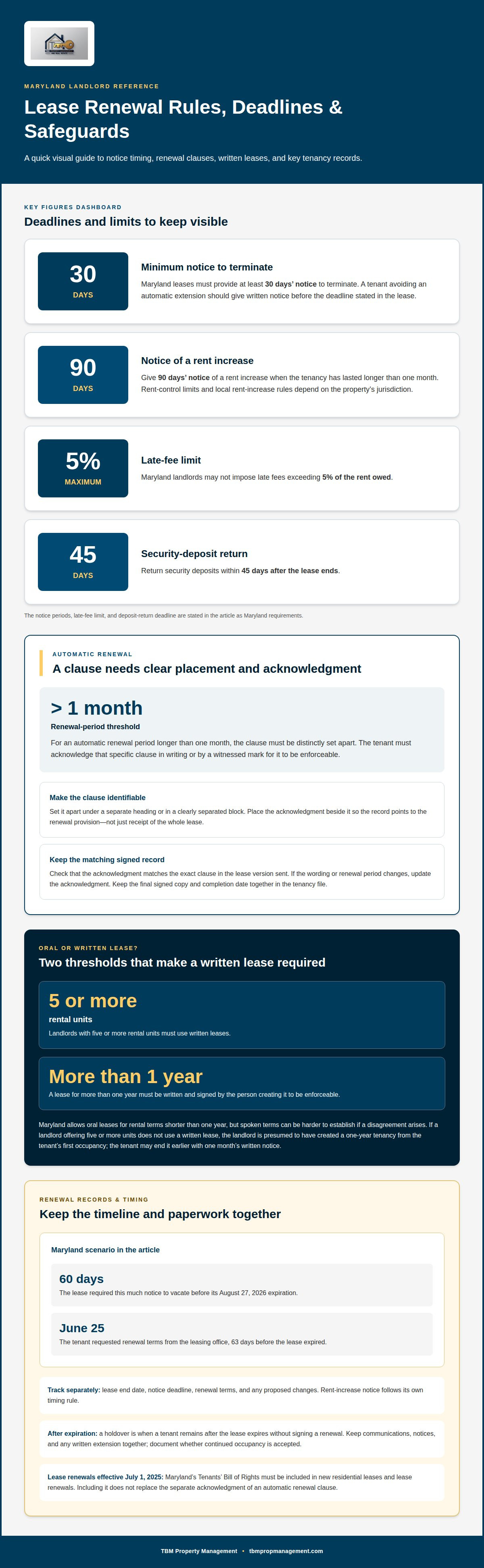
One overlooked clause can determine whether an automatic lease extension is enforceable. In Maryland, for renewal periods longer than one month, the provision must be distinctly set apart, and the tenant must acknowledge it in writing or by a witnessed mark, according to the Maryland General Assembly. The lease renewal process for landlords in Maryland also requires attention to rent-change timing: a landlord must give 90 days’ notice of a rent increase when the tenancy has lasted longer than one month, according to the Maryland General Assembly.
Renewing a lease involves more than deciding whether to continue a tenancy. You need to review the lease terms, track notice deadlines, set out any proposed changes, and communicate clearly with the tenant. This guide explains the lease renewal process for landlords in Maryland, from reviewing the existing agreement and preparing renewal terms to documenting signatures and responding to a tenant’s decision. It also covers Maryland rules on automatic renewals and rent increases, and how leasing support can help keep the process organized. A clear plan helps you make informed decisions and prepare for the next lease term.
Key Takeaways
- Keep renewal administration organized, including applicable limits on late fees: Maryland landlords may not impose late fees exceeding 5% of the rent owed.
- Make automatic renewal clauses clear and properly acknowledged to support enforceability.
- Understand when an oral lease is valid and when Maryland requires a written agreement.
- Review renewal terms and coordinate signing carefully; professional leasing support can help keep the transition on track.
Automatic lease renewal provisions
An automatic renewal clause extends a lease unless a party gives notice as required by the agreement. Review the clause, expiration date, and proposed terms together. A clear lease renewal process for landlords in Maryland starts with identifying each deadline and recording whether you intend to renew or end the tenancy.
Renewal Offer Rules
A renewal offer sets out the proposed terms for the next lease period. For automatic renewals longer than one month, the provision must be distinctly set apart, and the tenant must acknowledge it in writing or by a witnessed mark for it to be enforceable, according to the Maryland General Assembly.
Rent-control limits and local rent-increase rules depend on the property’s jurisdiction. Maryland landlords must give 90 days’ notice of a rent increase when the tenancy has lasted longer than one month, according to the Maryland General Assembly. A landlord may decline to renew, but the decision must not rely on unlawful discrimination or retaliation. Maryland’s Tenants’ Bill of Rights outlines tenant rights under state and federal law.
Advance Notice for Renewal or Nonrenewal
Advance notice is the time a landlord or tenant must provide before a lease ends or changes. Maryland leases must provide at least 30 days’ notice to terminate. A tenant who does not want an automatic extension should give written notice before the deadline stated in the lease.
Rent-increase notice has a separate timing rule: 90 days when the tenancy has lasted longer than one month, according to the Maryland General Assembly. The lease’s end date, renewal terms, and proposed changes shape the schedule. A reliable lease renewal process for landlords in Maryland tracks those deadlines and keeps copies of notices sent and received.
Tenants Staying After Lease Expiration
A holdover occurs when a tenant remains in the property after the lease expires without signing a renewal. The lease’s holdover terms and your response help determine next steps. Document your communications and whether you accept continued occupancy.
Keep the agreement, notices, and any written extension together in the tenancy file. Maryland landlords may not impose late fees exceeding 5% of the rent owed, according to the Maryland General Assembly. They must return security deposits within 45 days after the lease ends, according to the Maryland General Assembly. Clear records help establish the tenancy’s status after expiration.
Tenant acknowledgment of renewal clauses
A tenant acknowledgment is a separate record showing that the tenant recognizes an automatic renewal clause. In Maryland, the clause must be distinctly set apart when the renewal period exceeds one month. For the landlord to enforce it, the tenant must acknowledge it in writing or by a witnessed mark, according to the Maryland General Assembly. A signature elsewhere in the lease may not clearly show acknowledgment of this specific provision.
Make the clause easy to find in the lease. Set it apart under a separate heading or in a clearly separated block, and place the acknowledgment beside it. The record should identify the renewal provision, rather than simply confirm receipt of the entire agreement. For example, a dedicated signature or initials field can show which term the tenant acknowledged. Keep the completed lease and acknowledgment together in the tenancy file.
Before sending a renewal document, compare the acknowledgment with the exact clause in that version. If the renewal period or wording changes, make sure the acknowledgment refers to the updated provision. Keep the final signed copy and record the date it was completed. This makes it easier to distinguish acknowledgment of an automatic extension from agreement to other lease changes, such as a revised rent or term.
Maryland’s Tenants’ Bill of Rights must be included in new residential leases and lease renewals effective July 1, 2025. Treat that requirement separately from the automatic-renewal acknowledgment: including the document doesn’t replace recording the tenant’s acknowledgment of the clause. For a new tenancy, tenant placement support can help carry organized documentation from screening into lease execution.
Maryland landlords must include space for a separate tenant acknowledgment in a lease's automatic renewal provision. Tenants can also send non-renewal notices by certified mail to keep proof of delivery. In the Maryland scenario, the lease required 60 days' notice to vacate before its August 27, 2026 expiration; the tenant requested renewal terms from the leasing office on June 25, 63 days before the lease expired.
Oral and written lease validity
An oral lease is a rental agreement made through spoken terms. Maryland allows oral leases for rental terms shorter than one year, but spoken terms can be harder to establish if a disagreement arises. A dispute over the end date, rent, or renewal expectations may depend on each party’s recollection. Record the agreed terms to clarify what both sides discussed.
A written lease records rental terms in a document. According to the Maryland General Assembly, landlords with five or more rental units must use written leases. A lease for more than one year must also be written and signed by the person creating it to be enforceable. These are distinct requirements: the rental-unit threshold and the lease’s duration each affect whether writing is required.
Maryland’s rule for landlords offering five or more units also addresses what happens when they do not use a written lease. The landlord is presumed to have created a one-year tenancy from the tenant’s first occupancy. The tenant may end that tenancy earlier with one month’s written notice. This default can shape expectations when a tenancy reaches renewal without a signed document.
For a renewal, prepare a written agreement that clearly records the new term and any revised conditions. Keep the signed renewal with the original lease so the tenancy file shows how the agreement developed. If the parties discuss renewal orally instead, record the date and terms discussed. A clear written record distinguishes an agreed extension from an ongoing conversation, gives both parties a reference for the next expiration date, and reduces reliance on memory.
Reviewing and signing a new lease
A renewal review compares proposed terms with the existing agreement. A property manager can coordinate the offer, explain changes, and organize the completed records.
Rent Increases and Required Notice
A rent increase changes the amount due under a renewed tenancy. Maryland landlords may raise rent only when a lease is renewed. If the tenancy has lasted longer than one month, the landlord must give 90 days’ notice of an increase, according to the Maryland General Assembly.
A professional can identify the proposed rent, effective date, and notice deadline before sending the renewal. The written offer should make the change clear, so the tenant can review the amount and timing together. The applicable notice period depends on how long the tenancy has lasted.
Sending and Documenting Renewal Offers
A renewal offer is a written proposal for the tenancy’s next term. A professional reviews the existing lease, prepares the proposed terms, and sends the offer with enough time for consideration and response.
Keep a record of the version sent, its delivery date, and the tenant’s response. If a tenant requests an advance copy of a lease in writing, the landlord must provide one. Keep the request and supplied copy with the renewal file. After signing, retain the completed agreement and note any changed terms, such as rent or duration.
Official Forms and Legal Guidance
Official guidance explains the requirements that shape a residential lease renewal. The Maryland General Assembly provides the relevant statutory rules, while Maryland’s Tenants’ Bill of Rights outlines tenant protections under state and federal law.
Use those materials to understand legal requirements, and keep the renewal document consistent with the current lease and agreed changes. The Tenants’ Bill of Rights is guidance, not a substitute for documenting the specific renewal terms. For help coordinating the review and signing, request professional lease renewal support.
TBM Property Management
TBM Property Management helps landlords across Anne Arundel, Prince George's, Montgomery, and Howard counties, as well as Laurel, coordinate lease renewals as part of ongoing property oversight. Its Leasing Services support renewal administration, including organizing proposed terms, communicating with tenants, and keeping signed records. For owners balancing renewals with rent collection and other responsibilities, this brings leasing tasks into one management plan.
Consider professional support as a lease approaches expiration, when terms change, or when you manage renewals across rental properties in the region. TBM’s Full Service plan combines leasing support with rent collection and broader property oversight. This can help keep deadlines, documents, and tenant responses organized while you make the key decisions about your property.
For help with your rental property’s renewal process in Anne Arundel, Prince George's, Montgomery, or Howard counties, or the Laurel area, contact TBM Property Management.
Set up your next renewal with confidence
A well-managed lease renewal can support continuity for your rental property and provide a clear path into the next tenancy. Build the upcoming renewal into a consistent management plan instead of leaving it until the last minute. Professional support can help keep the process moving while you focus on decisions about your investment.
If you need help with the lease renewal process for landlords in Maryland, TBM Property Management offers Leasing Services and Full-Service Property Management, as well as Tenant Placement for rental needs. These services can bring leasing responsibilities into a coordinated approach to property oversight.
Ready to discuss support for your rental property? Contact TBM Property Management to talk about your next step. With a clear plan and steady support, you can approach the next renewal with greater confidence.
Frequently Asked Questions
What lease terms should Maryland landlords review or update before renewal?
Review the full agreement, not just the rent and end date. Check whether the tenant’s current occupancy, payment arrangements, utility responsibilities, and maintenance reporting process still match the written terms. For example, if the household or the property’s services have changed, identify whether the lease should reflect that before renewal. Separate items that need an owner’s decision from routine updates so the final draft is clear.
What steps does a professional handle when renewing a lease in Maryland, including deadlines and signatures?
Organize the renewal workflow around the existing lease’s expiration date and applicable notice requirements. Gather the current agreement and relevant addenda, flag decisions for the landlord, and coordinate edits before preparing the final document. Track which parties have signed, follow up on incomplete signing, and file the completed version with the tenancy records. This helps prevent an outdated draft from being mistaken for the agreed lease.
What Maryland laws protect tenants from retaliation or discrimination during lease renewal?
A landlord may decline to renew, but the decision must not be based on unlawful discrimination or retaliation. Maryland’s Tenants’ Bill of Rights outlines tenant protections under state and federal law.