
Software for Independent Landlords vs Professional Service: Costs and Tasks Compared
The tool that saves clicks may still leave the work on your desk. Comparing software for independent landlords with a professional service comes down to who handles the work: software can organize rent records, bookkeeping, reporting, and maintenance requests, while a property manager can take on recurring tasks within an agreed scope. The right fit depends on how much time and hands-on oversight you want to keep.
It’s understandable to value the visibility and control software can provide, especially when you want to keep rental finances and activity organized. But a dashboard does not collect rent, coordinate repairs, or manage tenant interactions on its own. This comparison of software for independent landlords vs professional service explains the difference across rent collection, bookkeeping, reporting, and maintenance, including what you still handle with each approach. Use the workload, oversight, and services you need to decide which option fits your property.
Key Takeaways
- Separate the features that organize property work from the hands-on tasks that still need someone’s attention.
- Compare how rent collection and accounting are handled, and identify how much oversight you want to retain.
- Learn what bookkeeping and reporting can show you, and where professional management can help coordinate maintenance.
- Use your preferred level of involvement to decide whether software, professional support, or a combination best fits your property.
What is Property Management Software and Why is it Useful?
Property management software organizes rental records and recurring tasks in a digital system. It can support an owner’s work, but it does not take responsibility for completing the tasks recorded.
Software for Independent Landlords: When to Choose Professional Property Management
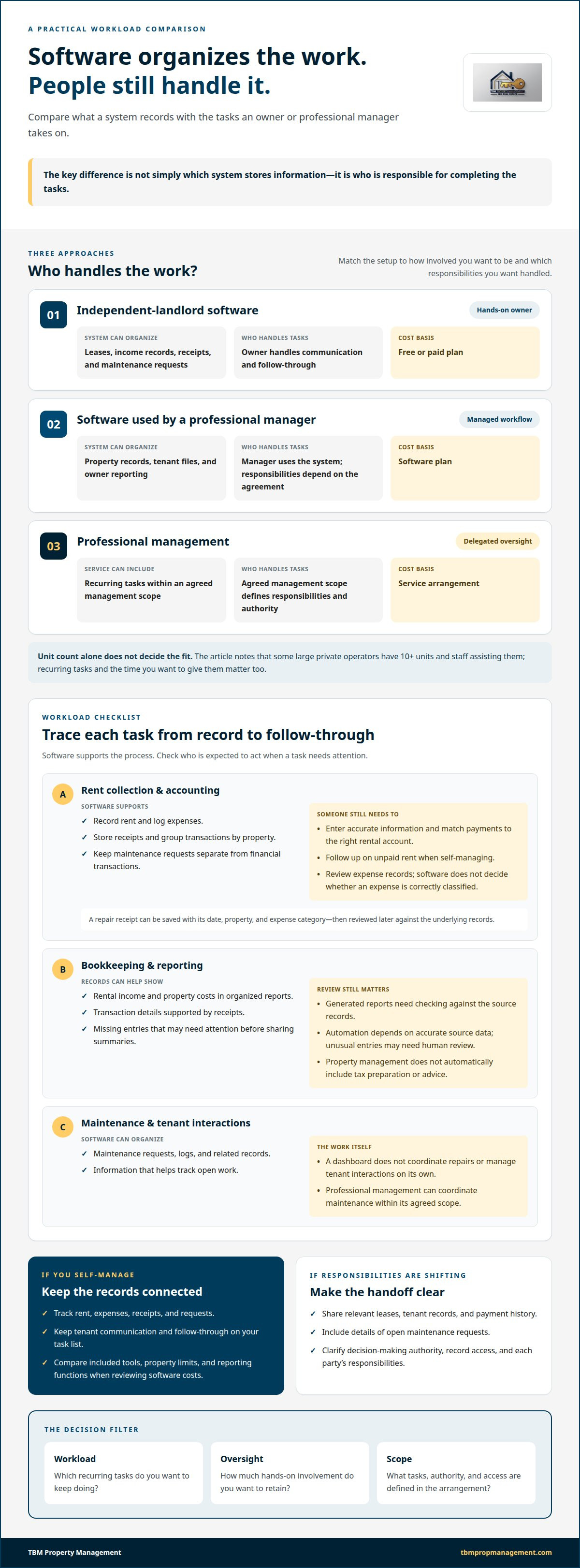
Independent-landlord software can organize leases, income records, receipts, and maintenance requests. The owner still handles tenant communication and follow-through. Some large private operators have 10+ units and staff assisting them, but unit count alone doesn’t decide whether professional management fits. It may make more sense when recurring leasing, rent collection, or maintenance tasks take more time than you want to give them.
Software for Professional Property Managers
Professional managers can use software to coordinate property records, tenant files, and owner reporting across their workflow. The system supports their work; the management agreement defines their responsibilities and authority. Applicable federal, state, and local landlord-tenant rules depend on location. The U.S. Environmental Protection Agency advises landlords to identify local laws, including reporting or response requirements.
Software Features and Management Style: When Professional Management Is a Better Fit
Software may include rent tracking, document storage, expense categories, and maintenance logs. The difference in software for independent landlords vs professional service comes down to who does the work, not simply which system stores the information. Clarify decision-making authority and record access, and define each party’s responsibilities to reduce operational and legal risks.
When moving from self-management to professional management, provide relevant leases, tenant records, payment history, and details of open maintenance requests. These records help the manager coordinate the transition and establish clear responsibilities.
Software Costs and Free Options
Software options may be free or charge for features and broader use. Compare the tools, property limits, and reporting functions included. When weighing software for independent landlords vs professional service, also consider the work you will continue to do, not just the cost of accessing software.
| Option | Best fit | Who handles tasks | Cost basis |
|---|---|---|---|
| Independent-landlord software | Hands-on owner | Owner | Free or paid plan |
| Professional-manager software | Managed workflow | Manager uses the system | Software plan |
| Professional management | Delegated oversight | Agreed management scope | Service arrangement |
Choose the approach that matches how involved you want to be and which responsibilities you want handled.
Rent collection and accounting
Rent collection links tenant payments with clear financial records. Software organizes transactions; professional management can collect rent and maintain records within its agreed scope.
Accounting Software for Independent Landlords
An independent landlord can use software to record rent, log expenses, and store receipts. A dashboard may group transactions by property, making it easier to compare income with costs such as repairs. The owner still needs to enter accurate information and follow up on unpaid rent. Maintenance requests can also be logged separately from financial transactions.
For example, save a repair receipt with its date, property, and expense category. That record supports later review, but software cannot decide whether the expense is correctly classified. The landlord still handles tenant communication and matches payments to the right rental account.
Financial Reporting and Tax Tracking
A professional property manager can collect rent and record transactions for the owner to review. Their workflow may connect each payment to a tenant account and capture receipts for maintenance expenses. This keeps records more organized than scattered files while the manager handles agreed administrative tasks. A platform can present income and expenses in reports or a dashboard.
Organized records help separate rental income from property costs for tax tracking. Reports can summarize transactions, and receipts provide details for individual expenses. Property management does not automatically include tax preparation or advice, so owners use the records for their own reporting needs. Clear reports also make it easier to spot missing entries before sharing financial summaries.
Compare the accounting workload you want to delegate with the reporting access you expect. If rent collection is the main pressure point, professional rent collection can shift that recurring task into a managed process.
Automated bookkeeping and reporting
Automated bookkeeping can link each payment to a property, tenant, and period, creating a repeatable trail from transaction to owner report. Software organizes the records; a manager reviews exceptions, follows agreed procedures, and explains unusual entries.
At month-end, for example, a manager can compare recorded receipts with the payment ledger and flag a missing receipt or duplicate entry. This review supports consistent tracking across properties and gives owners a clearer view of income, expenses, and outstanding items. Generated reports still need review against the underlying records.
Automation can sort recurring transactions, draft summaries, or send reminders based on entered dates. AI tools may help categorize transactions or flag unusual patterns, but their results depend on accurate source data. Human review matters before correcting records or making financial decisions. For example, a mislabelled repair charge can distort a property’s expense summary until someone updates it.
Professional management can connect reporting with rental marketing. A manager can coordinate a listing, handle inquiries, screen tenants, and carry approved lease details into property records. This links leasing activity to reporting, rather than leaving listings, screening records, and payments in disconnected workflows.
Clear roles matter. The owner supplies property and transaction information, while the manager maintains agreed records and provides reports through the chosen workflow. Reports should clearly identify rent received, property expenses, and maintenance costs. Consistent labels also make reporting periods easier to compare.
Before relying on automation, decide who reviews entries, handles exceptions, and shares reports. A professional manager adds value through oversight and follow-through, not simply by using a platform. This distinction helps you decide whether you need recordkeeping tools alone or delegated coordination for leasing and ongoing operations.
Maintenance tracking and vendor coordination
A maintenance request needs more than a digital entry. A professional manager can track the issue, coordinate follow-through, and keep the rental property’s records organized.
Start by recording the tenant’s request, the affected area, and the reported problem. For example, a note about a leaking kitchen sink gives the manager a specific issue to assess. The manager can coordinate vendor involvement, record updates, and document completion. A tracking record connects each step instead of leaving details scattered across messages.
Software can streamline this process by keeping requests and status notes together. Depending on the system, a mobile device can help a manager review a new request away from a desk. The manager still needs to assess the issue, communicate with the tenant, and coordinate what happens next. A status such as “scheduled” or “completed” is useful only when someone keeps the record current.
Vendor coordination also creates a useful history for each property. A record of a recurring heating issue, for example, can explain why another visit is needed. Attach the related invoice or update to the maintenance entry so owners can follow progress without piecing together separate conversations.
Keep maintenance records distinct from tenant screening, applications, and leases, since they document different parts of the rental relationship. If an eviction matter arises, maintenance notes alone do not determine its outcome. Keeping topics separate makes the property file easier to understand, while professional oversight can connect records without treating one as a substitute for another.
If maintenance requests are taking time away from ownership, get help coordinating property maintenance through professional management. Clear request tracking and vendor coordination can make ongoing property oversight easier to follow.
TBM Property Management: Full-Service Property Management
TBM Property Management provides full-service property management for owners who want professional support with ongoing rental oversight. If software helps organize records but leaves you handling tenant interactions, leasing, and rent follow-up, professional management can take those recurring responsibilities off your plate.
Support can include leasing services, tenant placement, and rent collection. These services are useful when you want help coordinating the rental process rather than managing each task yourself. The right arrangement depends on the responsibilities you want handled and the level of involvement you prefer to retain.
If you’re ready to discuss professional support for your rental property, contact TBM Property Management.
Choose the Level of Involvement That Fits Your Next Stage
Choosing between software for independent landlords and a professional service comes down to how you want to spend your time. Consider which responsibilities you want to keep and which you would rather delegate. A clear division helps you stay informed without personally managing every detail.
Before changing your approach, identify which tasks cause the most friction. You might keep direct oversight and use software for records, or delegate more responsibilities to a professional manager. Think about the communication and reporting you need, then use those preferences to guide your decision.
If professional support feels like the right next step, contact TBM Property Management to discuss your property management needs. You can explore an approach that suits your priorities and move forward with greater clarity.
Frequently Asked Questions
What is the difference between DIY landlord software and professional property management services?
Software helps landlords organize rental operations, while professional management delegates agreed responsibilities to a manager. For example, software can store a lease renewal date, but the owner remains responsible for handling the renewal unless that task is delegated. The practical difference is accountability: a tool supports a workflow, while a manager carries out assigned work and communicates about decisions.
What are the best alternatives to landlord software for independent landlords in 2026?
Options include managing the property yourself with software, hiring a professional property manager, or combining both approaches. If you mainly need leasing support, tenant placement and leasing services may fit; if you want ongoing help, consider full-service management. Choose based on the responsibilities needing attention, such as tenant communication, lease administration, rent collection, or property oversight.
How much does landlord software cost compared with a property management company?
Software and property management costs depend on different factors, so compare what each option covers rather than treating them as equivalent. Software pricing can vary with features, portfolio size, and payment functions. A management service’s cost depends on its agreed responsibilities and fee structure. Consider the time you retain, tasks delegated, and support included; service pricing is provided after a quote request.
What features should independent landlords look for in a professional property manager?
Look for a clearly defined scope, regular owner communication, and reports that make property activity easy to understand. Review how tenant screening, lease administration, inspections, and maintenance coordination are handled. A useful report distinguishes open issues from completed actions. Clarify decision-making authority, record access, and how the management arrangement can be changed or ended.
What services do professional property managers provide, and what fees do they charge?
Professional property managers may handle leasing, tenant placement, rent collection, tenant screening, inspections, and maintenance coordination, depending on the service arrangement. Fees vary with scope and fee structure; some arrangements charge recurring management fees, while leasing or placement may be priced separately. Review which tasks are included, how additional work is treated, and what financial reporting the agreement provides before choosing a service.
How many rental units can one landlord typically manage before hiring a professional property manager?
There isn’t a universal unit count that determines when to hire a manager. Some larger private operators have 10 or more units and staff, but that isn’t a hiring threshold for individual landlords. Workload also depends on property condition, tenant needs, leasing activity, and travel between properties. Consider professional help when recurring tasks begin competing with the time you can reliably give them.